




Blog
Mini Split Vs Heat Pump In South Carolina: Which Heating And Cooling System Is Right For Your Home?
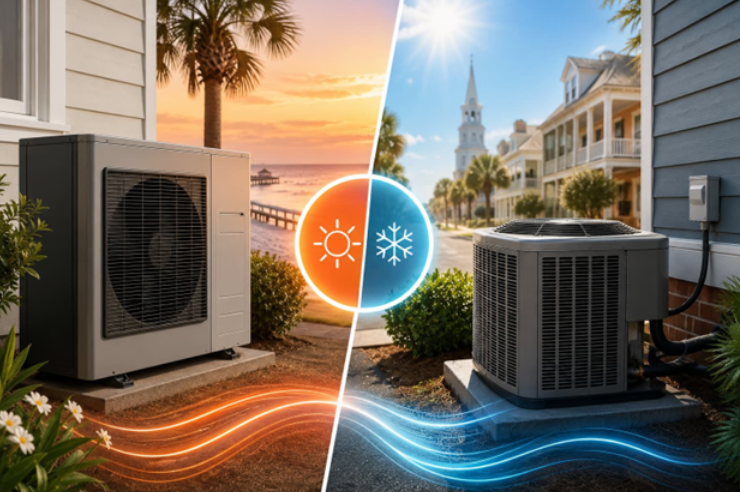
When comparing mini split vs heat pump systems, it helps to clear up one point first. A mini split is a heat pump. Both move heat to provide heating and cooling. The difference is how they deliver air conditioning through your home.
A central heat pump uses ductwork to serve the house. A mini split does not need conventional ducts and uses individual indoor units to condition specific areas. LimRic Plumbing, Electrical, Heating & Air installs both for Charleston homeowners, including Johns Island and Isle of Palms.
Schedule Online(843) 380-2175How A Heat Pump Works In South Carolina Homes
A central heat pump has an outdoor unit and an indoor air handler connected to your ductwork. During summer, it moves heat out of your house. When heating is needed, the process reverses and moves heat inside.
If your home already has usable ductwork, a central system lets you heat and cool the house through that existing distribution system. Before a heat pump installation, we calculate the heating and cooling load and check your ductwork, airflow, electrical setup, and equipment placement.
Geothermal is another type of heat pump. Instead of exchanging heat with outdoor air, it uses a ground loop. If your geothermal equipment has a repairable problem, we diagnose the failure and complete the geothermal heat pump repair without replacing equipment that is still in good condition. For a new ground-source system, we plan geothermal heat pump installation around your property, ground loop, and indoor equipment.
How A Ductless Mini Split System Works
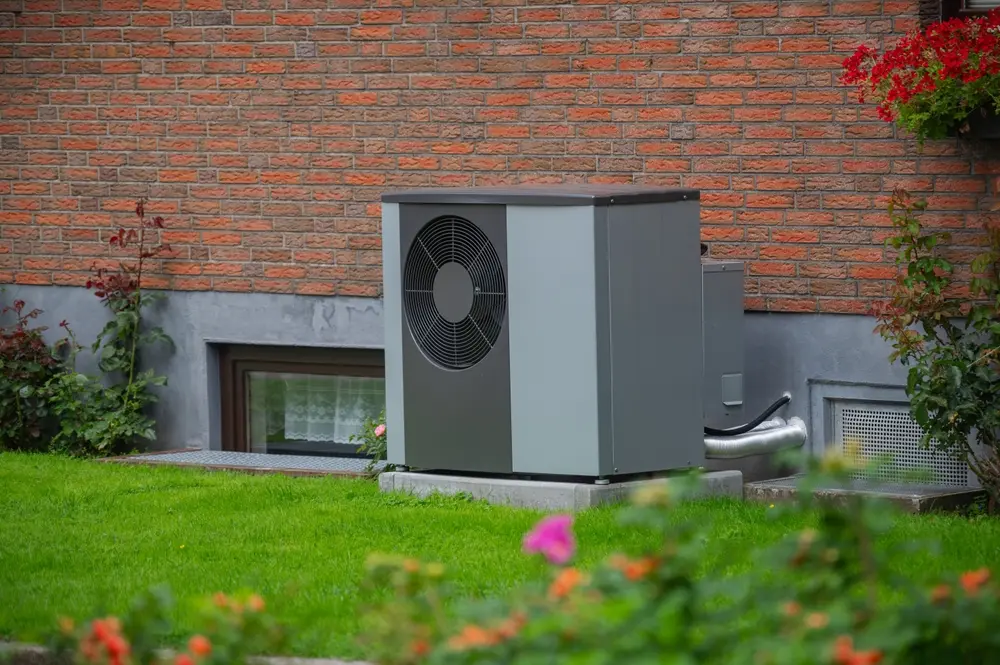
A ductless mini split connects an outdoor heat-pump unit to one or more indoor units. Each indoor unit delivers heating and cooling directly into the area it serves instead of sending air through ducts.
A single-zone system serves one area. A multi-zone system connects several indoor units to provide separate temperature control in different parts of the house.
For an addition, converted space, or home without usable ductwork, ductless mini split installation avoids adding a conventional duct system just to reach those areas.
Mini Split Vs Heat Pump: Pros And Cons
Energy Efficiency And Performance
Both central and ductless heat pumps are available in a range of efficiency ratings. Ductless equipment avoids energy losses from ducts, while a central heat pump uses the home's duct system to distribute heating and cooling throughout the house.
In Charleston's long, humid cooling season, sizing and runtime affect moisture removal. An oversized system that shuts off too quickly does not run as long during each cycle, which reduces the time available for dehumidification.
When comparing heat pump vs mini split equipment, look at the efficiency rating of the specific systems rather than assuming one type always uses less electricity.
Installation Requirements
For a central heat pump, we check your existing ductwork and airflow along with the electrical and refrigerant requirements. If the ducts need repairs or changes for the new equipment, we identify that work before installation begins.
A mini split does not require conventional ductwork, but it still needs correctly placed indoor units, an outdoor unit, refrigerant lines, condensate drainage, and electrical connections.
If your current central equipment is aging or failing, heat pump replacement removes that equipment and gives you the opportunity to choose a new system based on your homes needs.
Mini Split Vs Heat Pump: Which Is Better For Your South Carolina Home?
If your home already has ductwork in good condition and you want one central system serving the house, a ducted heat pump fits that setup.
A mini split gives you a different option when there are no ducts or when a specific part of the house needs its own heating and cooling. Multi-zone equipment extends that approach to several areas without adding conventional ductwork.
LimRic Plumbing, Electrical, Heating & Air looks at your home's layout, existing HVAC equipment, ductwork, and the areas you need to condition before recommending either setup.
Top Brands And Options For Mini Split And Heat Pumps
Heat pumps and mini splits come in different capacities, efficiency levels, and control setups. LimRic Plumbing, Electrical, Heating & Air works with HVAC equipment from Daikin, Goodman, Trane, American Standard, Lennox, and Carrier.
For ductless equipment, one of the first choices is single-zone or multi-zone operation. A single-zone system pairs one indoor unit with an outdoor unit. Multi-zone equipment connects several indoor units so different areas have their own temperature control.
Control options vary by equipment as well. We review the thermostat or system controls, efficiency ratings, warranty coverage, and maintenance requirements before you select the equipment.
Schedule Online(843) 380-2175Frequently Asked Questions
A mini split is actually a type of heat pump designed for ductless heating and cooling. While traditional heat pumps use ductwork to serve the entire home, a ductless mini system delivers air directly into specific rooms. Both are energy-efficient HVAC options for homes in South Carolina, and LimRic Plumbing, Electrical, Heating & Air can help determine the right installation for your space.
When comparing mini split vs heat pump systems, ductless mini units are often more energy efficient because they avoid energy losses through ductwork. However, modern heat pumps are also highly efficient for whole-home heating and cooling. The best choice for South Carolina homes depends on your layout, energy goals, and professional HVAC installation.
Yes, a ductless mini system with heat pump technology provides reliable heating and cooling even during cooler South Carolina winters. Many mini systems are designed for high energy efficiency and zoned comfort. LimRic Plumbing, Electrical, Heating & Air installs heat pumps and ductless mini units that perform well in local climate conditions.
Most central heat pumps require ductwork to distribute heating and cooling throughout the home. However, a ductless mini heat pump does not need ducts, making installation easier in older homes or additions. For homeowners in South Carolina, LimRic Plumbing, Electrical, Heating & Air can assess your existing HVAC setup and recommend the most energy-efficient solution.
Choosing between mini split vs heat pump systems depends on your home’s size, existing ductwork, energy efficiency goals, and budget. A ductless mini works well for zoned heating and cooling, while central heat pumps are ideal for whole-home comfort. A professional HVAC consultation in South Carolina ensures proper installation and long-term performance.